Sunday, November 13, 2011
Ecological Conscience
According to Aldo Leopold, Ecological Conscience is neccessary to maintain a good land ethic. He claims that people today only conserve their land to the extent that is necessary and profitable and exptect the government to do the rest. Conservation education must build an ethical understanding for land economics and a universial curiosity to understand the "land mechanism", or the understanding of each different part of an ecosystem. The "ecological consicene" is the ability for people to recognize the intregate parts of nature, not only the one they deem personally useful. They must know that every human action has an ecologiacal consequence.

Wednesday, November 9, 2011
"Walking" next to the "Round River"
Both of these texts, "Walking" and "Round River", examine man's relationship with nature. Specifically how nature could possibly be conserved or preserved. In these two quotes, one from each text exemplify this scenerio. First from "Round River", Leopold writes, "Conservation is the state of harmony between men and land". This basically amounts to the theory that man must acknowlege nature, and build up a good enough relationship with it and want to perserve it. Likewise, Thoreau wrote, "The wilderness the preservation of the world." This is basically saying that in order to preserve the world for future generation, we must look to the wilderness for help in the process. These quotes are similar in that they both dipict a scenerio that show preservation of wilderness is not only necessary, but plausable. They both show that man must work with the wilderness, but also give it space to grow and flourish.
Wednesday, November 2, 2011
Leopold
In his essay, Thinking Like a Mountain, Aldo Leopold, makes the following arguement. In which he discusses why top predators are essential for the survival of an ecosystem.
"I now suspect that just as a deer herd lives in mortal fear of its wolves, so does the mountain live in mortal fear of its deer. And perhaps with better cause, for while a buck pulled down by wolves can be replaced in two or three years, a range pulled down by too many deer fail of replacement in as many decades." -Leopold 140
http://chelm.freeyellow.com/page37.html
http://www.ehow.com/way_5751627_ways-preserve-ecosystems.html
"I now suspect that just as a deer herd lives in mortal fear of its wolves, so does the mountain live in mortal fear of its deer. And perhaps with better cause, for while a buck pulled down by wolves can be replaced in two or three years, a range pulled down by too many deer fail of replacement in as many decades." -Leopold 140
http://chelm.freeyellow.com/page37.html
http://www.ehow.com/way_5751627_ways-preserve-ecosystems.html
Wednesday, October 26, 2011
Essay #2
The Million Dollar Contest
The news of the contest traveled quickly since it was first announced on the radio earlier that afternoon. By the evening it made every newscast in the country and all of America was buzzing about the challenge. The next morning the headline of a local newspaper read:
Bulletin
NBC to host “Wilderness Game Show”.
Primetime show will find ten contestants to see who could survive in the wilderness the longest without any civilized tools. Winner to receive one million dollars.
By the end of the week, letters from all around the country flooded the NBC offices. Ten contestants were chosen and the program began to air just two months later. The ten contestants were sent to the wilderness of North Dakota where each was given 200 acres of land to use to their disposal; each having access to some water source.
The contestants were striped of their cloths and all tools. Each was given one knife, one blanket, and a map of how to get out should they choose to give up. They were to be so secluded that no even the cameras would follow their journey. The broadcast was basically a view of the forest waiting for each person to give up.
On the evening of June 30th, America watched as these ten contestants, five men and five women, were escorted to their prospected area of the wilderness and left to fend for themselves. Each night, America tuned in to see if any of the contestants had given up yet. On just the second day, the first two contestants came wandering out, both of which were women. That nights show feature the an interview of both contestants.
The first woman out, Martha, said that it was a lot harder that it first would seem. She stated that she was attempting to cross a river when she slipped into the river and lost her knife in the process. And when it started raining and she could not build a shelter, she was forced to exit the competition. The second woman out, Abigail, was chased by a black bear and she was forced to exit her area of the forest. Both women were given some small gifts and sent back home.
It wasn’t until the fifth and sixth days of the competition that the next two contestants came out of the forest. This time, one man named Jarrod, and one woman named Maggie found their way to the exit. Both of who could not obtain any substantial food beyond some small plants and would have starved if they remained any longer. On the 8th day of the competition, one more woman, Stacy, walked out suffering from severe stomach pains after she contracted poison ivy.
At the two week mark, five contestants remained in the wilderness, four men and one woman. But on day sixteen, two men walked out. Jeffery and Theodore were forced out of the race after they had each eaten a poisonous plant and became ill. This left just three people left in the running. Theodore commented later that he had run into some problems with a large amount of mosquitoes in his section of the woods.
On the 20th day of the show, the last women limped out of the forest. She had injured her leg while hunting a deer on the 17th day. She tried with all her might to carry on in the contest injured but on the late on the 19th day, her injuries got the best of her and she began her journey to the exit.
By this point, the show had grabbed the attention of millions of viewers nationwide. Just two men remained in the woods, Michael and James. The show was practically broadcasted twenty-four hours a day as America waited anxiously for one of these men to give up. It wasn’t until the 35th day that James walked out the forest. He had made the crucial mistake of leaving his campfire unattended while he went out looking for food. While he was away the fire spread around his shelter and by the time James returned and put the fire out, all of his belongings had been destroyed and he was left with no other choice but to evacuate the forest.
James was informed that he was the ninth person out so he stayed to congratulate Michael. But when the NBC crew went into the woods to tell Michael that he had won all of the televisions had went black, for what was found of Michael was merely a corpse. It was later determined that he had contracted West Nile Virus from a mosquito and died on the 27th day.
With that news, James was declared winner and was presented a check of one million dollars to mark the end of the competition. The show received great reviews for NBC, but the producers said that there would be no more like it because of the injuries received by several of the contestants.
Concluding Statement
Merchant describes man as one with the wilderness. She believes that theory’s of the Garden of Eden have shaped the Western view of wilderness. That wilderness is this lost paradise. But in this story, no one contestant is really bonded with the wilderness. Their time in the forest is a constant struggle with nature. However, the reviews the show received from the public shows the romantic appeal of wilderness on the American culture. On the contrary, Nash believes that wilderness is not some lost paradise. As Nash describes, wilderness is mans greatest evil, and that man should fear it as an enemy. In this story, the wilderness is by far the opposite of paradise for the ten participants. After living their whole lives in the lap of luxury, most of these contestants don’t survive a week in the wild.
The contest shows that civil society has grown so far away from basic knowledge, that if all of modern society suddenly disappeared, very few would be able to survive.
Monday, October 24, 2011
Project #2 Conclusion
Merchant describes man as one with the wilderness. But in this story, no one contestant is really bonded with the wilderness. Their time in the forest is a constant struggle with nature. However, the reviews the show recieved from the public shows the romantic appeal of wilderness on the American culture.
As Nash describes, wilderness is mans greatest evil. In this story, the wilderness is by far the opposite of paradise for the ten participants. After living their whole lives in the lap of luxary, most of these contestants dont survive a week in the wild. The contest shows that civil society has grown so far away from basic knowledge, that if all of modern society suddenly disappeared, very few would be able to survive.
As Nash describes, wilderness is mans greatest evil. In this story, the wilderness is by far the opposite of paradise for the ten participants. After living their whole lives in the lap of luxary, most of these contestants dont survive a week in the wild. The contest shows that civil society has grown so far away from basic knowledge, that if all of modern society suddenly disappeared, very few would be able to survive.
Monday, October 17, 2011
Narrative of Heaven and Earth in Jest
This article will help with the second paper because highlights various aspects of the wilderness. The only part of the article that contradicts the ultimate definition of wilderness is the aspect of their being a house in the forest on page 74. But other than that, the article discusses interaction with wild animals and how nature acts in the presense of people. It talks about the importance of settling near a body of water as well as how to deal with various insects. The article goes on to discuss the significance of the spiritual aspect of wilderness. It talks about how heaven and earth come together through wilderness. In addition, on page 76, it says that wilderness is often the inspiration for writers as well as for artists. It also discusses the importance of man taming the wilderness for survival purposes. My second paper will explore these ideas in more detail.
Tuesday, October 11, 2011
Paper #2 Sketch
I drew up this idea for paper #2. I don't like it much, but its something to work with.
Its about a television prime time show that features several contestents giving up everything they have to go into the wilderness and start over with nothing. It would be like a game show that offers a reward to the person who stays away from society the longest. But at the end, the person who wins ultimately gives all the money away because he has grown so fond of the wilderness and plans to willingly stay in the woods indefinitely.
Im still working the deatails out. Whether I go with this idea or another, its a solid start.
Its about a television prime time show that features several contestents giving up everything they have to go into the wilderness and start over with nothing. It would be like a game show that offers a reward to the person who stays away from society the longest. But at the end, the person who wins ultimately gives all the money away because he has grown so fond of the wilderness and plans to willingly stay in the woods indefinitely.
Im still working the deatails out. Whether I go with this idea or another, its a solid start.
Monday, October 3, 2011
Chapter 9 Summary
In this chapter we see a shift in the way people viewed wilderness during the late 19th century. People went from describing wilderness as a place of evil to a place that needs to be reserved. Joseph Knowles was a fascinating figure during that time period because of his time spent in the wilderness free from any civilized means of survival. This was shocking to the rest of society because they have grown so far from their primitive ways, that nobody ever dreamed of leaving the comforts of home and go into the woods and try to survive. This also proved that the wilderness was not evil, and that it should be treasured as one of America's great assets.
Monday, September 26, 2011
Picture Essay
Picture Essay Analysis
What is wilderness. A dictionary describes it as a “mostly uninhabited area of land in its natural uncultivated state”. A young child may define wilderness as a forest, jungle, or any place with many trees. And despite the accuracy of both of these definitions, “wilderness” has had a much broader meaning throughout human history. Roderick Nash takes a biblical approach to the term in the first chapters of his book, Wilderness and the American Mind. In these opening chapters, Nash depicts wilderness as a place of spiritual tranquility, but also as a place of evil and wickedness.
In light of this photo essay, we’re going to look at how wilderness has changed in human thought over time, and how civilization has single handedly created, and destroyed, wilderness. According to Nash, civilization is what created wilderness. That is before civilization, there was no concept of wilderness, it was merely land. The photo essay does focus primarily on the American aspect of wilderness, but does include a couple of biblical references as well.
The first picture is an artist rendition of Adam and Eve in the Garden of Eden. The Garden of Eden represents wilderness in its most natural form; untouched by humans until the arrival of Adam and Eve. The biblical story does show the importance of wilderness in that time period. How these two people appear in the wilderness, and when they disturb nature they are subsequently punished for their sinful action by being banned from re-entering the garden. The picture itself shows Adam and Eve, both naked, reluctantly picking an apple from a tree, an obvious reference to the biblical tale. However, in the background of the picture you could see other people, even one in the apple tree between Adam and Eve. Which bring into question the extent of this wilderness around them. Why would the artist include other people when the famous story of the Garden of Eden clearly indicates the absence of any other human being besides Adam and Eve in the “garden”.
The next picture is another biblical one depicting Saint Joseph sitting by himself on a rock with a few animals near by, just thinking to himself. St. Joseph appears to be upset, but the wilderness around him appears to be just that, uninhabited by any human beings. The animals near him do not seem to be aware of his presence and the land around him is untouched. Relating this back to Nash and how wilderness represents a place of spiritual tranquility, St. Joseph has probably been through some stressful and emotional life event and went out into the wilderness to think it over. He isn’t bothering the wilderness and the nature isn’t bothering him. He is simply trying to find himself on the outskirts of society.
From there, the pictures progress to pre-colonial America. The first showing Native American’s hunting, not in the wilderness, but in their home. Because in accordance to Nash, there was no civilization in America at that time, and in the absence of civilization, wilderness cannot exist.
The next serious of picture is what America would have looked like before English explorers docked their ships off the shore. The fourth picture is a pre-revolutionary depiction of Manhattan Island in modern New York City. Upon observation you could see a few houses and ships, but for the most part it is barren land. The next picture is a photograph taken of Mount Rushmore before the construction of the presidential monument. The next three pictures are of the Grand Canyon, the Rocky Mountains, and the Arizona Dessert. All of these pictures have one thing in common, they all express the idealistic American wilderness. They all represent totally different regions in America, but none show any sign of human contact, thus presenting a sense of wilderness in its most clear definition.
In the next three pictures, we find the white man integrating itself into this “wilderness”. First we see what appears to be first contact between Native American and Europeans. The Europeans learning that their vision of wilderness is completely different than that of the people of the “new world”. The next image is of Meriwether Lewis and William Clark exploring the newly acquired lands of the white man. Followed by the famous painting by John Gast, American Progress, which shows westward expansion in 1872. This series of pictures show how the untouched land from the previous three images are being transformed from wilderness to homeland, through European exploration.
The next two images show how man’s interaction with wilderness can make it unrecognizable. The first being New York City today. A land that in a previous picture was barely touched by humans, becoming one of the biggest and busiest cities in the world in a matter of a few hundred years. This proves that in the hands of man, wilderness doesn’t have very long until it gets transformed into an industrial mess. Although one good observation from this photo, is of central park and despite the fact that we have become so industrialized, yet in the biggest city’s in the world still manage to treasure this huge park right in the center of it. It does say a lot about what nature and the idea of wilderness still says about us as a society today. And the next picture of Mount Rushmore as it appears today in an almost unrecognizable state as it did in the first photo. The producer of that work however, President Theodore Roosevelt, did take environmental issues into consideration and organized the national park system. Which takes us to the next photo of Yellow Stone National Park. Theodore Roosevelt, one of the greatest minds in American History, knew how important preserving American Wilderness was to our country and set aside this area of land as one that should see very little human contact and be deemed the first National Park in the world. In this picture we can see a open region free from human contact with a few buffalo grazing in the foreground.
The last picture takes us in a different direction. It shows what happens to wilderness when left in the hands of unappreciative, selfish people. This picture shows a Redwood Tree in California, just one of many, that was carved out in such a way to create a tunnel for passing traffic just to save literally two seconds of driving to go around the tree rather than through it. This is an absolute disgrace to the American wilderness. Some trees need to be chopped down to create room for structures, or for other resources, but to do this to a tree because it was a minor inconvenience to drive around it is unacceptable.
This photo essay demonstrates how people have gone from viewing the wilderness as a sacred place in the Garden of Eden, to totally playing the role of god to cutting right through it in modern California in a matter of a few thousand years. Man’s time on earth is limited, and like most species that came before us will most likely one day become extinct as well. Individually, we are here for just a short time, but our footprint is left on earth forever.
Monday, September 19, 2011
Summaries
Nash (8-9)
In the opening chapter of Wilderness and the American Mind, Nash describes wilderness as mans greatest evil and the complete oposite of paradise. He discusses how man needs to take control of the land through deforestation and raising crops. This process was familiar to early english explorers and ultimately shaped how settlers were able to survive in colonial america. Man has definitely come a long way from such primative thought however. We've gone from viewing the wilderness as an evil setting to embracing it and trying to preserve it in just a few hundred years. Because it is indeed civilization that creates wilderness.
Merchant (132-133)
Carolyn Merchant takes a different approach in her first chapter regarding wilderness. Tracing wilderness back to a time period even before english settlement of the new world. She takes wilderness from a biblical perspective and the first wilderness known to man, "the garden of eden". She pokes holes in the christian religion when she recalls the counts of Benjamin Franklin and his recollection of english explorers interaction with native americans. How we told them the biblical story of the garden of eden and they responded in the only way they knew how. By describing themselves as one with wilderness, that this is how they always lived and need to live in order to survive without having some spiritual being prosecute them for their actions.
Nash (25)
Nash describes the discovery of the New World as a notion to Europeans that an "earthly paradise" lay somewhere to the west. A place bountiful of "fabulous riches, a temperate clime, longevity, and garden-like natural beauty". Europeans embraced the new world because it opened new doors for them. Not only from an economical stand point, it also opened their eyes to something which they typically secluded themselves from the past. The enviornment was hostile to the explorers at first because they werent use to such conditions, and subsequently many didnt make it through the first winter. But later expansion westward, and experimenting with different crops made the weary explorers turn heads in the old world.
In the opening chapter of Wilderness and the American Mind, Nash describes wilderness as mans greatest evil and the complete oposite of paradise. He discusses how man needs to take control of the land through deforestation and raising crops. This process was familiar to early english explorers and ultimately shaped how settlers were able to survive in colonial america. Man has definitely come a long way from such primative thought however. We've gone from viewing the wilderness as an evil setting to embracing it and trying to preserve it in just a few hundred years. Because it is indeed civilization that creates wilderness.
Merchant (132-133)
Carolyn Merchant takes a different approach in her first chapter regarding wilderness. Tracing wilderness back to a time period even before english settlement of the new world. She takes wilderness from a biblical perspective and the first wilderness known to man, "the garden of eden". She pokes holes in the christian religion when she recalls the counts of Benjamin Franklin and his recollection of english explorers interaction with native americans. How we told them the biblical story of the garden of eden and they responded in the only way they knew how. By describing themselves as one with wilderness, that this is how they always lived and need to live in order to survive without having some spiritual being prosecute them for their actions.
Nash (25)
Nash describes the discovery of the New World as a notion to Europeans that an "earthly paradise" lay somewhere to the west. A place bountiful of "fabulous riches, a temperate clime, longevity, and garden-like natural beauty". Europeans embraced the new world because it opened new doors for them. Not only from an economical stand point, it also opened their eyes to something which they typically secluded themselves from the past. The enviornment was hostile to the explorers at first because they werent use to such conditions, and subsequently many didnt make it through the first winter. But later expansion westward, and experimenting with different crops made the weary explorers turn heads in the old world.
Thursday, September 15, 2011


Tuesday, September 13, 2011
Biblical Depiction of Wilderness
To fully understand the term wilderness in the sense of a definition, one must first locate the origin of the word. As Nash described it, Wilderness "designates a quality that producesa certain mood or feeling in a given individual and, as a consequence, may be assigned by that person to a specific place". This explanation directly relates to the biblical interpretation of a place where people are in spiritual tranquility as opposed to the grievences of civilization. Afterall, wilderness cannot exist without the establishment of civilization.
Nash also referenced how the term wild in the Old English as a description of "creatures not under the control of man". Basically any land in its natural state, such as the Garden of Eden before Adam and Eve arrived there. Once man call this place home, it loses its wild characteristic.
Nash also referenced how the term wild in the Old English as a description of "creatures not under the control of man". Basically any land in its natural state, such as the Garden of Eden before Adam and Eve arrived there. Once man call this place home, it loses its wild characteristic.
Wednesday, September 7, 2011
Defining Wilderness
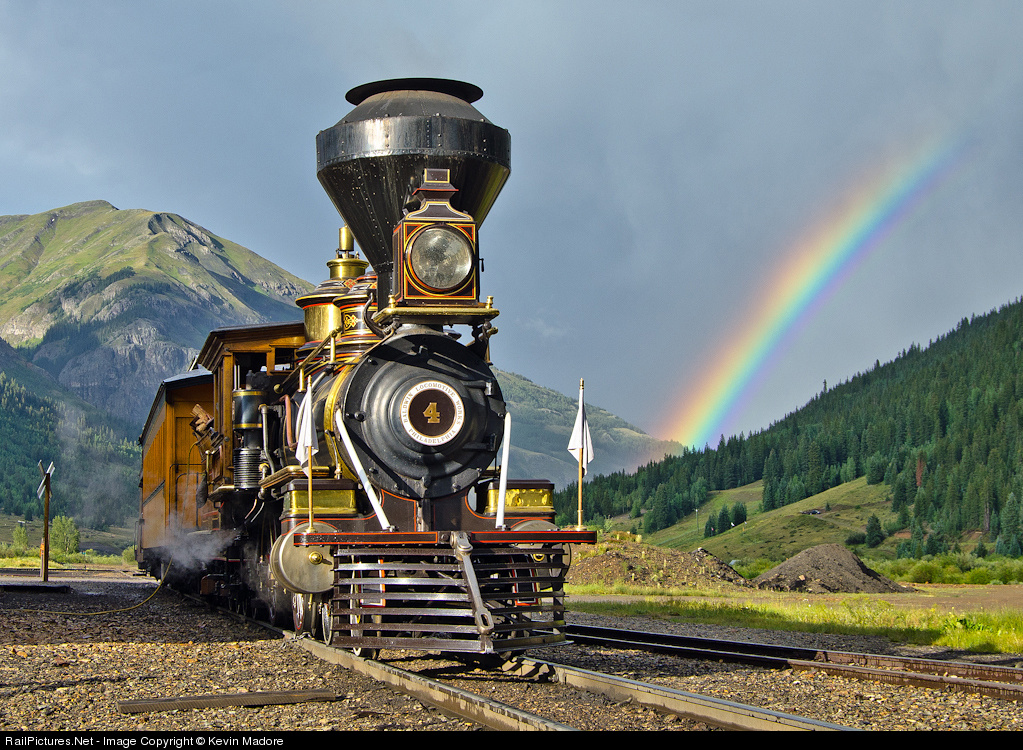
The central focus of the picture is of course the steam engine chugging throught the valley. Which is what the American Wilderness has transformed into. Take away the train and you have the ultimate vision of wilderness. The rugged mountain in the distance, free from any human contact. Then off to the right is a sort of pine barrens that also appears to be free from human habitat. But we must take into consideration the train as well. From the Atlantic to the Pacific, the enitre United States of America looked like the backround of the picture. But through the years, people have devloped the land into cities and towns by way of deforestation and wilderness deconstruction. And unless the federal government designates more natural wilderness that may not be industrialized, the rest of the country is just going to be a steaming pile pollution and garbage. The wilderness is something to be treasured and valued in my opinion. In a hundred years from know, whats is the youth going to explore and find themselves if all we have is city streets. Like the people on this tratin, it is important to explore the wilderness around you, but not to go as far as industrializing every last area of the country.
Subscribe to:
Comments (Atom)